Women deserve the right to make choices without coercion or guilt.
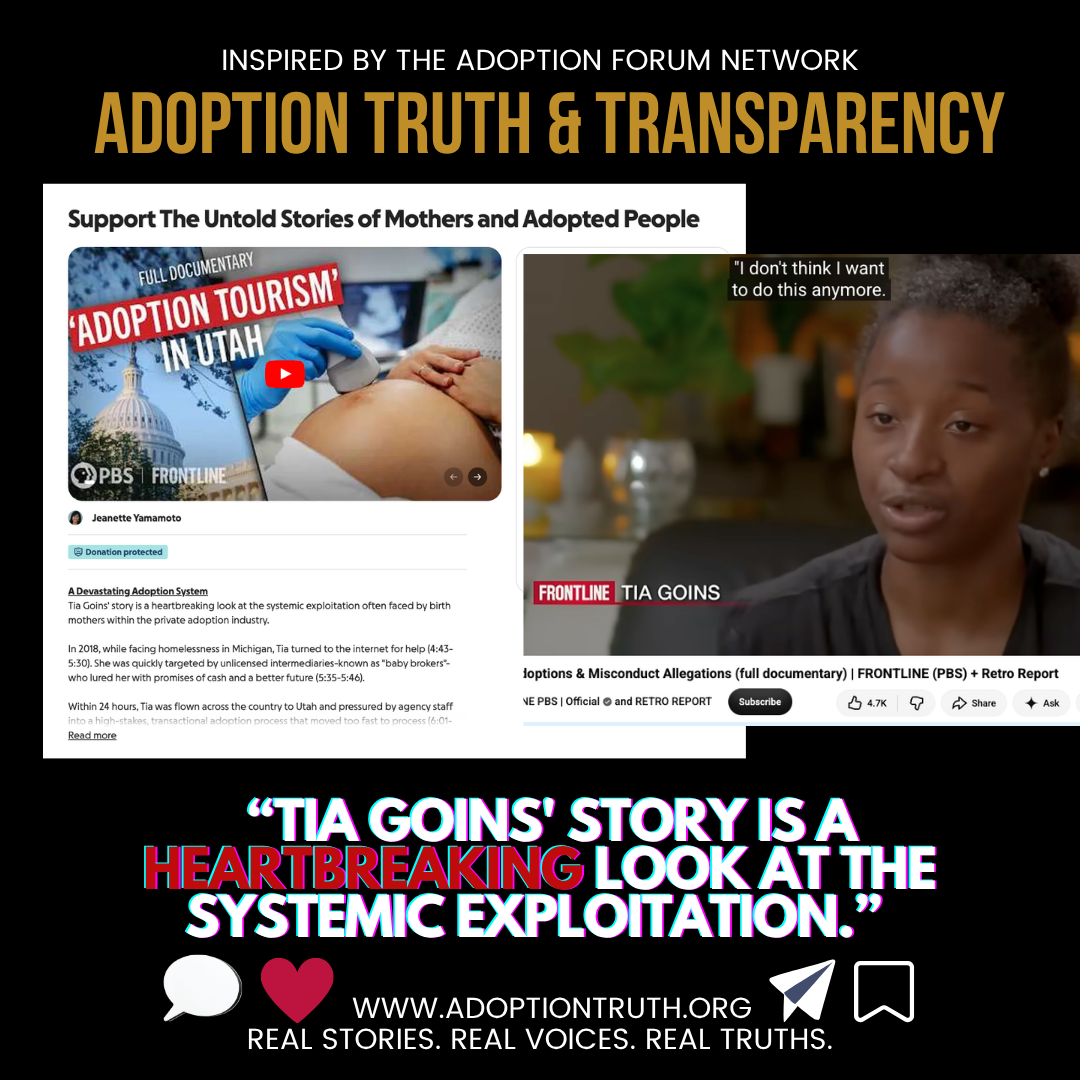
Adoption Truth and Transparency Worldwide Information NetworkWhen the topic of abortion versus adoption arises, the conversation is often framed in a way that villainizes women who choose abortion while glorifying adoption as a noble, selfless act. But what if adoption isn’t about saving children at all? What if adoption is a multi-billion dollar industry driven by paying customers, profit-seeking agencies, and a system designed to control and suppress women?
The Driving Force Behind Adoption: Paying Customers
Adoption is not about finding homes for children in need—it is about providing children to paying customers. The adoption industry thrives because people are willing to pay tens of thousands of dollars to obtain a child. Adoption agencies, lawyers, religious institutions, and lawmakers all benefit from the lucrative market of newborn adoptions. Vulnerable mothers are the supply, and desperate adopters are the demand.
While society shames abortion, it conveniently ignores how adoption agencies systematically groom women into giving up their babies. Words like “relinquishment” and “placing a child” soften the reality that these mothers are often coerced, misled, and left traumatized. They are told they are making a “loving choice,” yet they are strategically manipulated into a decision they may regret for life.
Lawmakers & Adoption Profiteers: Controlling Women Through Adoption
A shocking recent proposal in Missouri reveals the dark truth of adoption: Republican lawmakers want to create a database to track pregnant, at-risk women who may consider abortion. The goal? To match them with adoptive couples—much like an online dating site like eHarmony. This isn’t about helping women; it’s about securing a steady supply of babies for paying customers.
This kind of surveillance of pregnant women is a clear violation of human rights. It treats women as breeders, stripping them of their autonomy and decision-making power over their bodies. It also disregards the lifelong impact of adoption trauma on both the mother and the child, all to satisfy the financial and emotional desires of prospective adoptive parents.
The Church’s Role in Fueling the Adoption Machine
Religious organizations are some of the biggest benefactors of the adoption industry. Churches frame adoption as an act of Christian charity, using patriarchal narratives to push women into giving up their children. The same institutions that preach “pro-life” rhetoric fail to provide adequate support for struggling mothers. Instead, they fuel the adoption business, ensuring that more babies are funneled into the system for financial and social gain.
The Handmaid’s Tale in Real Life
The coercion of vulnerable women into relinquishing their babies isn’t new—it is deeply rooted in history. From the Baby Scoop Era to the Magdalene Laundries, the systemic oppression of women through forced adoptions has long been a reality. The modern adoption industry continues this legacy by dressing it up as a noble, selfless act. In reality, it is legalized trafficking—taking babies from poor mothers and giving them to those with financial power.
Adoption is Not the Solution
Adoption is marketed as the “better” alternative to abortion, but the reality is that it is not a solution—it is a business. The real solution is supporting mothers, providing financial assistance, healthcare, and social services so they can parent their children. Instead of prioritizing the desire to pay adopters, society should focus on empowering mothers to keep their babies and thrive.
Who Benefits From Adoption?
Before anyone considers adoption a noble cause, they must ask: Who benefits? The adoption industry is a carefully crafted system of power and profit that capitalizes on the vulnerability of women. Until we address the real issues—poverty, lack of support, and systemic coercion—adoption will continue to be a manipulative, profit-driven industry masked as charity.
Women deserve the right to make choices without coercion. Babies are not commodities to be processed for adoption. The conversation should not be about abortion vs. adoption—it should be about dismantling a system that exploits the vulnerable for financial gain.